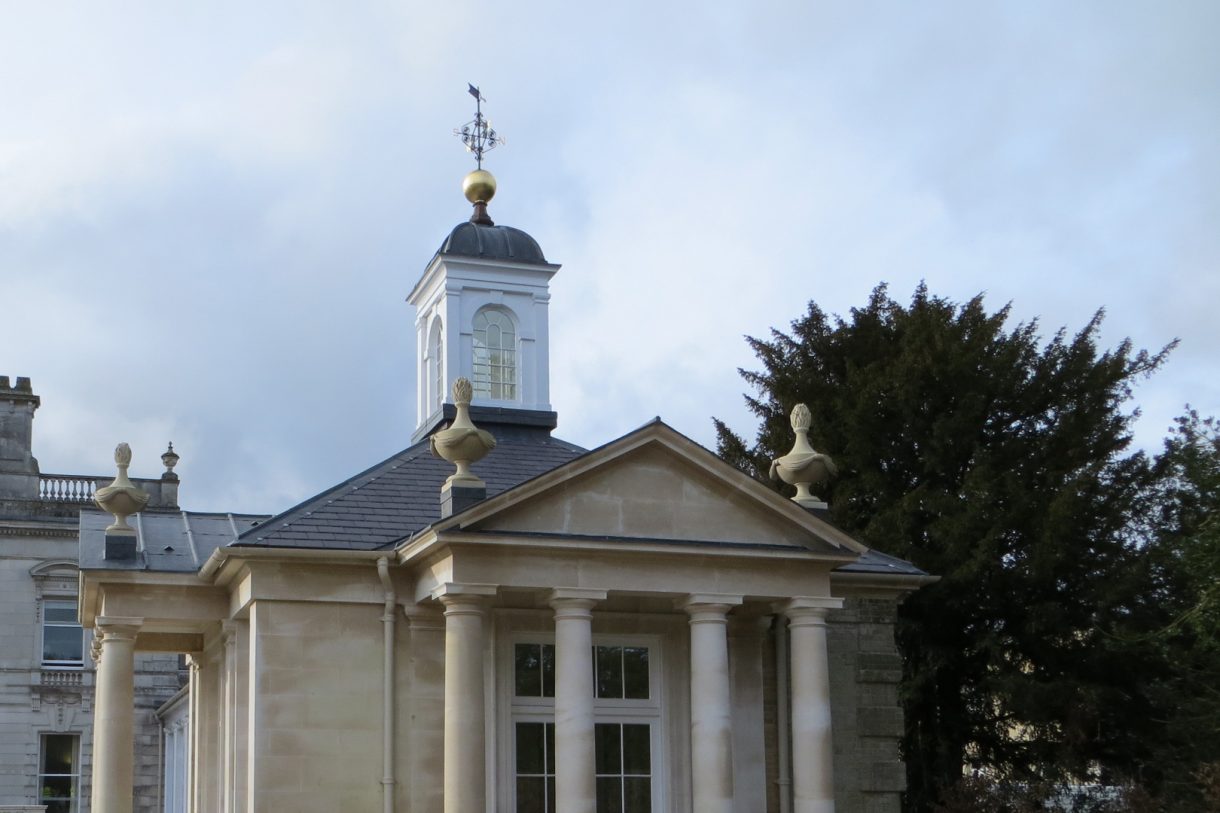
Tedworth House, a distinguished Grade II* listed country mansion in Tidworth, Wiltshire, has a rich history dating back to its original establishment before 1650. The current structure, completed between 1828 and 1830, showcases classical architectural design. Over the years, the estate has been associated with notable figures such as Thomas Assheton Smith and later served various roles, including as a military officers’ mess. In recent years, Tedworth House has been repurposed as a recovery centre operated by the charity Help for Heroes, providing support to wounded, injured, and sick service personnel and veterans. Most of the current house dates from 1828 – 1830. The term “palmery” refers to a greenhouse or conservatory designed for cultivating palm trees and other exotic plants.
In 2011 renovation and conversion work started at Tedworth House as part of its adaptation into one of four Recovery Centres run for Help for Heroes. Tedworth House aims to inspire the wounded, injured and sick and returning veterans to lead active, independent, and fulfilling lives, which will enable them to reach their full potential and to support them and their families for life. It is a place of opportunities providing education, training, sport, and adventure in a relaxed, understanding and caring environment where state of the art facilities and dedicated staff aid the road to recovery.
Part of this program of works was to recreate the long-demolished Palmery, to be used as an atmospheric extension to Café Hero where residents and staff can sit and enjoy a freshly brewed coffee. Using old photographs the Architects designed the new building which Wells Cathedral Stonemasons translating the designs into stone.
Nearly 800 cubic feet of Portland Perryfield was used on this project.